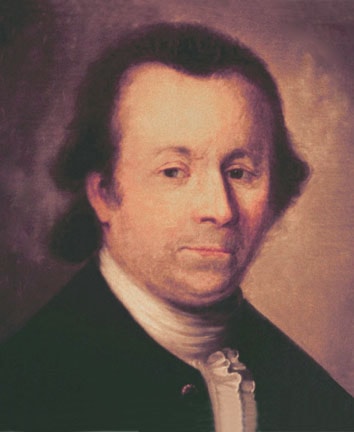
Georgia Didn't Have to Authorize Its Delegates. It Just Sent Them.
By the time the Continental Congress voted on Richard Henry Lee's resolution for independence on July 2, 1776, Georgia had no functioning colonial government left for its delegates to report back to. The royal governor, James Wright, had been placed under house arrest by the Georgia Council of Safety in January 1776. He escaped in February and fled to a British warship offshore. From that moment on, Georgia was effectively governing itself.
The Provincial Congress of Georgia had met in Savannah in April 1776 and elected three delegates to the Continental Congress: Button Gwinnett, Lyman Hall, and George Walton. Those three men rode north with instructions to "propose, counsel, and assent to all such measures as they shall judge to be for the common good." In the loose language of 1776, that was permission to vote for anything, including independence.
On July 2, when the vote was called, all three Georgia delegates said yes. Georgia was the twelfth and last colony to vote for independence that day. New York had abstained.
The Youngest Colony
Georgia was barely older than Button Gwinnett himself. Founded in 1732 by James Oglethorpe as a refuge for English debtors and a buffer between South Carolina and Spanish Florida, Georgia was only 44 years old in 1776. It was the smallest colony by population, with fewer than 50,000 residents including enslaved Africans, and most of them lived within 50 miles of Savannah.
Because it was so new and so exposed, Georgia depended on British military protection more than any other colony. British regulars kept the Creek and Cherokee from attacking frontier settlements. British warships protected the rice and indigo trade out of Savannah. For most Georgians, a break with Britain meant losing the only thing keeping the colony alive.
That reluctance is why Georgia sent no delegates to the First Continental Congress in 1774. It was the only colony absent. Georgia eventually came around, but slowly, and the three men who ended up in Philadelphia in 1776 were not natives. They were newcomers from other colonies.
Button Gwinnett
Button Gwinnett was born in Gloucestershire, England, in 1735. He was the son of a clergyman and had worked as a merchant in Bristol before emigrating to Georgia in 1765. He set up shop in Savannah, failed at it, bought a rice plantation on St. Catherines Island, and failed at that too. By 1776 he was deeply in debt but politically ambitious.
Gwinnett was elected to the Continental Congress in February 1776, arrived in Philadelphia in May, and signed the Declaration of Independence on August 2. He returned to Georgia and became commander of the Georgia militia, then briefly acting governor. He got into a feud with his political rival, Lachlan McIntosh, over a failed invasion of British Florida. McIntosh called Gwinnett a "scoundrel and lying rascal" on the floor of the Georgia Assembly. Gwinnett challenged him to a duel.
They fought on May 16, 1777, outside Savannah. Both men were wounded. McIntosh recovered. Gwinnett did not. He died of gangrene three days later, at the age of 42.
Because Gwinnett lived less than a year after signing the Declaration and wrote relatively few letters that survived, his signature is one of the rarest and most valuable in American history. A single authentic Button Gwinnett signature has sold at auction for over $700,000. The rarity is not about quality. It is about how little of him survived.
Lyman Hall and George Walton
The other two Georgia signers had more conventional histories but equally unusual paths to Philadelphia. Lyman Hall was a Connecticut-born Congregationalist minister who had been defrocked for "immoral conduct," moved south to practice medicine, and settled in the Puritan settlement of Sunbury, Georgia. He was politically radical, allied with New England rather than with the Georgia tidewater planters, and among the first Georgians to speak publicly for independence.
George Walton was a Virginia-born orphan who had apprenticed as a carpenter before teaching himself law. He moved to Georgia in 1769 at age 28, practiced law in Savannah, and became a leading voice of the Georgia Whig faction. After signing the Declaration, he was captured by the British at the fall of Savannah in 1778 and spent nearly a year as a prisoner of war. He later served as governor of Georgia and as a United States senator.
None of the three Georgia signers had been born in Georgia. All three had come south looking for something they could not find at home: land, opportunity, reinvention, or escape. In that sense the Georgia delegation was deeply representative of the colony it served. Georgia in 1776 was itself a colony of outsiders.
The Peach State
Georgia's nickname today is the "Peach State," which has nothing to do with the Revolution and everything to do with 19th-century agricultural marketing. In 1776, peaches were barely grown in Georgia. The state's real colonial crop was rice, grown in tidewater swamps drained by enslaved labor.
But the nickname captures something true about Georgia then as now. It is a state that has, more than most, invented and reinvented itself. It invented itself as a penal colony, then as a plantation society, then as a cotton kingdom, then as a modern metropolis. The three men who voted yes for Georgia on July 2, 1776 were part of that first reinvention, the one that turned a British buffer colony into an American state.
We commemorate Georgia on our 50 State Heritage Collection ornament.