Laundry in the East Room
The East Room is the largest of the State Rooms in the White House, and it was the last to be finished. Architect James Hoban and President George Washington designed it as a Public Audience Room. When John and Abigail Adams moved in, the room was still unfinished. Abigail hung the family laundry there to dry.
When James and Dolley Madison arrived in 1809, they hired architect Benjamin Henry Latrobe to decorate the State Rooms. War with Great Britain interrupted those plans.
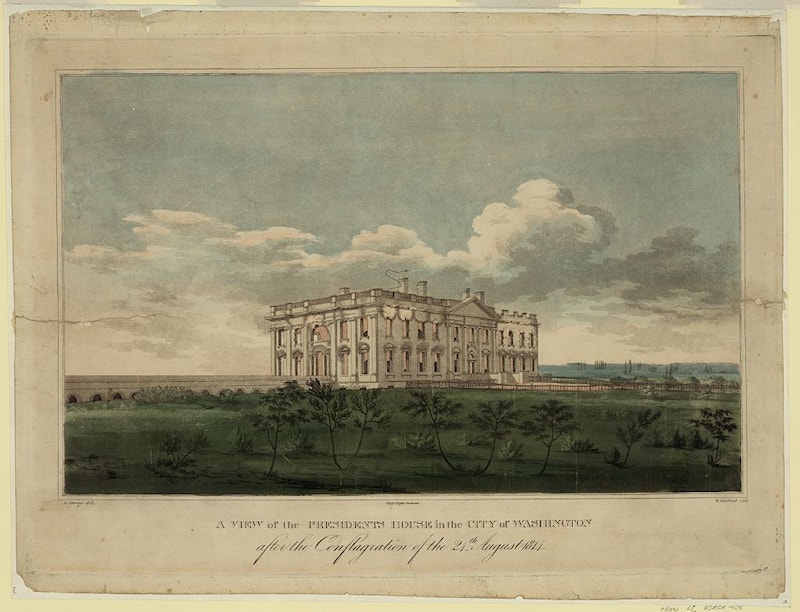
August 24, 1814
On August 24, 1814, British troops entered Washington. President Madison had already left. Dolley stayed long enough to give orders.
Hanging in the house was a life-sized portrait of George Washington by Gilbert Stuart, the Lansdowne portrait, installed in 1800. It was the first artwork purchased for the White House. Preserving it mattered. It also mattered that the British not take it.
Dolley ordered the official papers packed, the silver gathered, the crimson velvet draperies of what is now the Blue Room taken down, and the Washington portrait saved. The picture was screwed to the wall. Unscrewing it took too long. She ordered the frame broken and the canvas taken out.
Who Took It Down
She did not cut it from the wall herself. Paul Jennings, who was enslaved in the Madison household and later wrote the first White House memoir, called that story "totally false." It would have required a ladder. The work was done by Jean Pierre Sioussat, the steward, Thomas McGrath, the gardener, and Jennings.
Two New Yorkers who had come to help, Jacob Barker and Robert G. L. De Peyster, carried the canvas into Montgomery County, Maryland, and hid it in a farmer's barn.
That night the British burned the President's House.
The Portrait Comes Home
The Madisons never lived in the rebuilt rooms. James Monroe moved back in 1817. The portrait came home with him. It hangs today in the East Room, paired with a full-length portrait of Martha Washington. It is the only object now on display that was in the house when it opened.
In the painting, a book leans against the table. The title is meant to read "Constitution and Laws of the United States." Stuart spelled it "Sates."
Still Looking
The laundry is gone. The room was finished. The portrait is still there.
Our 2022 White House Heritage Collection ornament was designed so the eye goes to that painting, the same way it does in the East Room. Light and shadow. A Christmas tree standing in front of Washington. Finished in 24k gold, made in America, and sold only here.
See the 2022 East Room ornament.