On July 21, 1892, President Benjamin Harrison signed a proclamation in Washington naming Friday, October 21, 1892, a general holiday for the people of the United States. The day marked 400 years since Columbus reached the Americas.
Congress started it. A joint resolution approved on June 29 directed the president to recommend "public demonstrations" and "suitable exercises in their schools." Harrison's proclamation went further on the schools. He asked that they be "the center of the day's demonstration," and he wrote, "Let the national flag float over every schoolhouse in the country."
A Boston magazine for young readers, The Youth's Companion, had been pushing for a school celebration, and it printed the official program in its September 8 issue. The committee that wrote it was chaired by Francis Bellamy, who worked for the magazine. Teachers were to begin by reading the president's proclamation aloud. Then the children would raise the flag and salute it, repeating a short new pledge: "I pledge allegiance to my Flag and the Republic for which it stands: one Nation indivisible, with Liberty and Justice for all."
The schools were to hold their exercises at the same time as the dedication of the World's Columbian Exposition grounds in Chicago. On October 21 the dedication went ahead in Chicago with parades, troops, and governors from across the country. Vice President Levi P. Morton stood in for the president.
Harrison was home in the White House. His wife, Caroline, had been ill since spring, and he had given up campaign travel that fall to stay with her. They had come back to the White House on September 21. She died there on October 25, four days after the holiday.
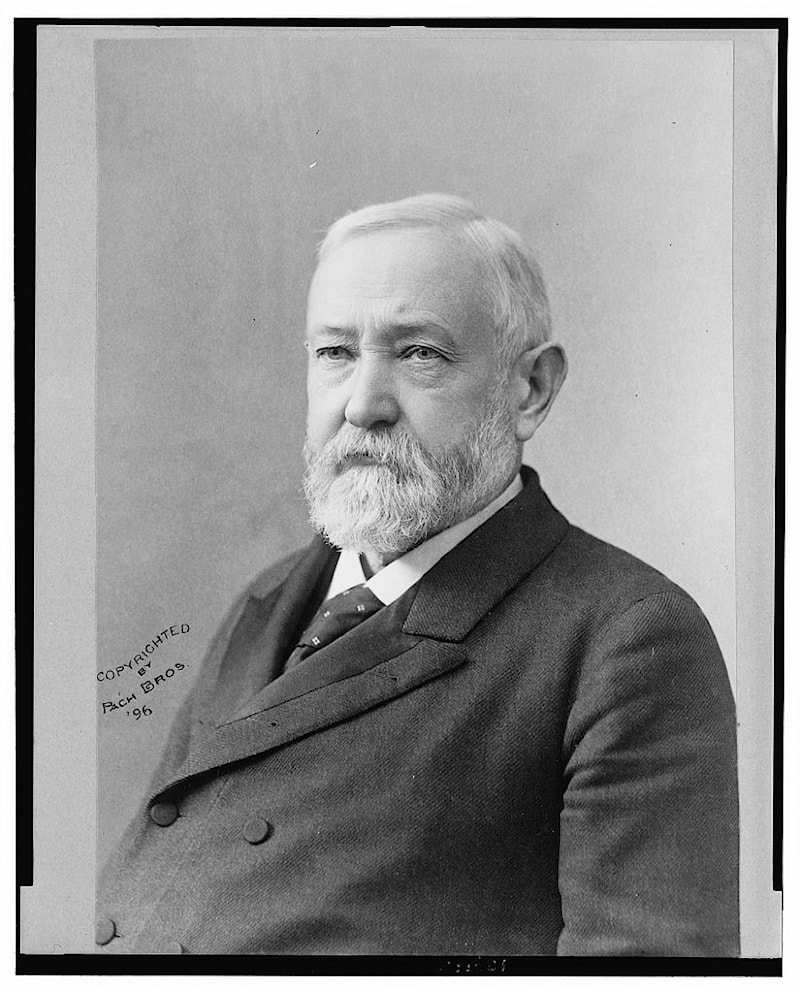
Across the country, children read his proclamation and said Bellamy's words for the first time. The pledge has been reworded since, but it has stayed in American classrooms ever since. The portrait at the top of this post is a Pach Brothers studio photograph of Harrison from 1896, now in the Library of Congress.
Harrison is also the president who brought the first Christmas tree into the White House, in 1889, for his grandchildren. We carry the 2008 White House Historical Association Harrison Christmas Ornament, a gold-plated tree with toys underneath and crossed flags at the top. It is $33.95 and in stock.