On Friday, October 13, 1775, in the Pennsylvania State House in Philadelphia, the Continental Congress voted to arm a ship. The colonies had been fighting British troops since April, but they had no warships of their own. That vote is why the United States Navy counts October 13 as its birthday.
The idea had a rough start. A week earlier, delegates took up a Rhode Island proposal to build an American fleet. Samuel Chase of Maryland, according to John Adams's notes, called it "the maddest Idea in the World." Congress set the big question aside.
A smaller, practical problem changed minds. Word had reached Philadelphia that two unarmed British supply ships had sailed for Quebec loaded with arms and powder. A committee of Silas Deane of Connecticut, John Langdon of New Hampshire, and Adams drew up a plan to catch them. On the 13th, Congress resolved that "a swift sailing vessel, to carry ten carriage guns" be fitted out to stop ships supplying the British. A second vessel was ordered the same day.
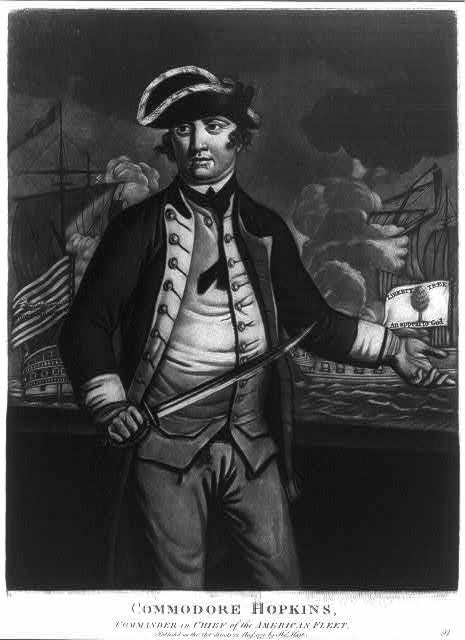
By fall the naval committee had grown, and it met every evening at six in a room at a Philadelphia tavern. Adams called the work "the pleasantest part of my Labours." The committee bought merchant ships and renamed them Alfred, Columbus, Cabot, Andrew Doria, and Providence. In December, Congress made Esek Hopkins of Rhode Island commander in chief of the fleet. A London printseller published the portrait of him shown here in 1776, with warships behind him and a flag reading "An Appeal to God."
Adams kept his interest in ships. As president in 1798, he signed the law creating a separate Navy Department, and in 1800 he became the first president to live in the White House. Since 1972 the Navy has kept October 13 as its official birthday, and this year it turns 251.
We carry ChemArt's 250th Anniversary of the U.S. Navy Ornament, made for last year's anniversary of that October vote. It makes a good gift for anyone who has served at sea, or anyone with a sailor in the family.